Dr Sunit Pani WhatsApp Book

Understand your injury

These are the knee and shoulder injuries I see most. I’ve written down what I usually explain at the first visit, so you can read it again at home or before you come in.

The knee

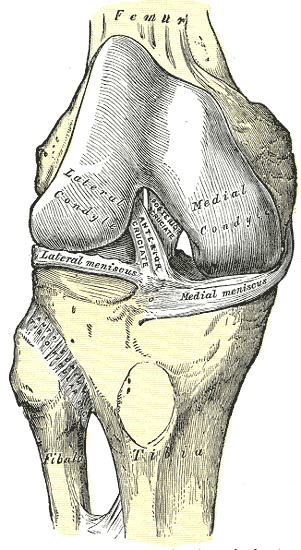
Gray's Anatomy engraving of the knee showing its ligaments and menisci

ACL tear

Your ACL is the ligament in the middle of the knee. It stops the shin bone sliding forward and twisting under the thigh bone.

How it usually happens
A sudden turn, an awkward landing, or a twist with the foot stuck to the ground. I see it most after football, kabaddi, basketball and badminton, and very often nobody even touched the player.
What you’ll notice
Many people hear or feel a pop. The knee swells within a few hours and you can’t carry on playing. Weeks later it can give way when you turn quickly.
How I confirm it
I examine the knee first. An MRI then confirms the tear and shows whether the meniscus or cartilage has been hurt too.
Treatment
If you don’t play turning sports and the knee feels steady, physiotherapy alone can be enough. If it keeps giving way, or you want to get back to sport, I rebuild the ligament through keyhole surgery using one of your own tendons. A torn meniscus is often repaired in the same operation.
Getting back
You’ll walk with support within a day or two, and most people start jogging around four months. Turning sports come later, at nine months or more, and only once you pass strength and hop tests.

Worth knowing: each time an unstable knee gives way, it can damage the meniscus and cartilage a little more. That’s the main reason I don’t like to leave a wobbly knee alone.

PCL tear

The PCL sits just behind the ACL. Its job is to stop the shin bone sliding backwards.

How it usually happens
A fall straight onto a bent knee, or the classic dashboard injury, when the knee hits the dashboard in a car crash.
What you’ll notice
There’s often less swelling than with an ACL tear, so people tend to shrug it off. You may feel pain at the back of the knee and feel unsure of it on stairs or slopes.
How I confirm it
On examination the shin sags backwards. An MRI shows the tear, and stress X-rays sometimes help me grade it.
Treatment
Most partial tears heal with a special PCL brace and a lot of thigh muscle work. I reconstruct the PCL when it’s completely torn and the knee is unstable, or when other ligaments are torn as well.
Getting back
Expect a brace for several weeks. After reconstruction, getting back to sport usually takes nine to twelve months.

Worth knowing: PCL tears often come with a posterolateral corner injury, so I check for both at the first visit.

Meniscus tear

You have two menisci in each knee. They’re C-shaped cushions of cartilage that take the shock between your thigh and shin bones.

How it usually happens
In younger people it’s usually a twist on a bent knee, often together with an ACL tear. After about 40 the meniscus gets worn, and a simple squat can tear it.
What you’ll notice
Pain along the side of the joint, swelling, and catching. Some knees lock and won’t straighten until you wiggle them free.
How I confirm it
An examination and an MRI, which shows where the tear is and what shape it is.
Treatment
I’d rather save a meniscus than remove it, so I repair it whenever the tear can heal. Sometimes I add a clot made from your own blood to help it heal. I trim it only when repair isn’t possible. Worn tears that don’t lock often settle with physio and need no surgery at all.
Getting back
After a repair: a brace and careful walking for four to six weeks, and sport at four to six months. After trimming, you’re walking within days and usually back to sport in about six weeks.

Worth knowing: a root tear, where the meniscus comes away from the bone, behaves as if the meniscus isn’t there. Arthritis can follow quickly, so I try to repair these early. Read the guide to meniscus root tears.

MCL injury

The MCL runs down the inner side of the knee and stops it buckling inwards.

How it usually happens
A tackle from the outside, or the knee caving in when you land.
What you’ll notice
Pain and tenderness on the inside of the knee, some swelling, and a wobbly feeling when you step sideways.
How I confirm it
I gently push the knee inwards to grade the injury. An MRI shows whether any other ligaments are hurt.
Treatment
Most MCL tears, even complete ones, heal in a hinged brace with physio. I operate when the tear is severe and comes with an ACL or PCL tear, or when the knee stays loose.
Getting back
Two to three weeks for a mild sprain, four to six for a moderate one, and six to twelve for a complete tear. Longer after surgery.

Worth knowing: the MCL heals better than most ligaments, but only if the knee is protected properly in the first few weeks.

Posterolateral corner (PLC) injury

The posterolateral corner is a group of ligaments and tendons at the outer back of the knee. It stops the knee bowing outwards and twisting.

How it usually happens
A blow to the inner front of the knee, the knee being bent backwards, or a high-speed sports or road injury. It rarely happens on its own and usually comes with an ACL or PCL tear.
What you’ll notice
Pain on the outer side, and a knee that feels unstable when you walk or bows outwards. If your foot feels numb or you can’t lift it, the nerve may be stretched. Get seen urgently.
How I confirm it
Specific twisting tests and an MRI. This one is easy to miss if nobody looks for it.
Treatment
Mild injuries heal in a brace. For bigger ones I repair the torn structures, ideally within the first few weeks, or reconstruct them, usually in the same operation as the cruciate ligament.
Getting back
A brace and limited weight on the leg for about six weeks. Sport usually at nine to twelve months.

Worth knowing: a missed PLC injury is one of the commonest reasons an ACL or PCL reconstruction fails. I check for it in every knee ligament injury.

The shoulder

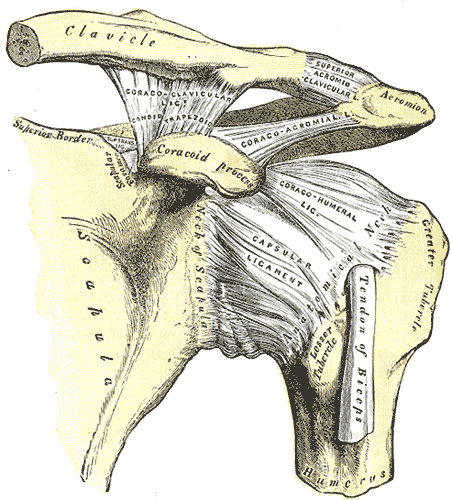
Gray's Anatomy engraving of the shoulder joint and its ligaments

Bankart tear (shoulder dislocation)

When the shoulder pops out forwards, it can tear the labrum, the rim of cartilage around the front of the socket. That tear is called a Bankart lesion.

How it usually happens
A fall on an outstretched arm, or the arm forced back and out, like diving for a catch, tackling or saving a goal.
What you’ll notice
The shoulder comes out or partly slips. Afterwards you may not trust it with your arm overhead. Each dislocation tends to happen more easily than the last one.
How I confirm it
An examination, X-rays and an MRI. If I think some bone has broken off the socket, a CT scan as well.
Treatment
After a first dislocation in an older or less active person, physio is often enough. In young, active people, or after repeat dislocations, I stitch the labrum back with small anchors through keyhole surgery. If a lot of bone is missing, a bone block operation may be the better choice.
Getting back
A sling for about four weeks, then physio. Non-contact sport at three to four months, contact sport at five to six.

Worth knowing: young people who dislocate once often dislocate again, and every time a little more bone and cartilage gets damaged. Get it checked early.

Hill-Sachs lesion

A dent in the back of the ball of the shoulder. It happens when the ball hits the edge of the socket during a dislocation, so it usually comes with a Bankart tear.

How it usually happens
The same injuries that dislocate the shoulder. The dent gets bigger with each dislocation.
What you’ll notice
The same as an unstable shoulder. A big dent can catch on the edge of the socket and make the shoulder slip out in certain positions.
How I confirm it
X-rays, an MRI or a CT scan to measure the dent and any bone missing from the socket. Those two measurements decide which operation you need.
Treatment
A small dent needs nothing more than the Bankart repair. For a larger one I fill the dent with tendon during the same keyhole operation, a procedure called remplissage. Very large defects may need a bone graft.
Getting back
The same as after a Bankart repair.

Worth knowing: measuring the bone loss before surgery is what makes the repair last.

AC joint dislocation

The AC joint is where the collarbone meets the top of the shoulder blade. Strong ligaments hold it together.

How it usually happens
Landing right on the point of the shoulder, often in a bike fall or in football or rugby.
What you’ll notice
Pain on top of the shoulder, a bump you can see, and pain when you reach across your body.
How I confirm it
X-rays, sometimes of both shoulders, to grade it from I to VI.
Treatment
Grades I and II settle with a sling for a week or two and physio. Grade III usually does fine without surgery, though heavy manual workers and overhead athletes sometimes do better with an operation. Grades IV to VI need surgery to hold the joint in place.
Getting back
Without surgery, back to normal activity in two to six weeks. After surgery, a sling for four to six weeks and full activity at three to four months.

Worth knowing: most AC joint injuries don’t need an operation. The grade on the X-ray decides, so get proper X-rays.
Not sure what’s wrong?

Bring whatever scans you have and I’ll go through them with you.

General information only. It can’t replace an examination.